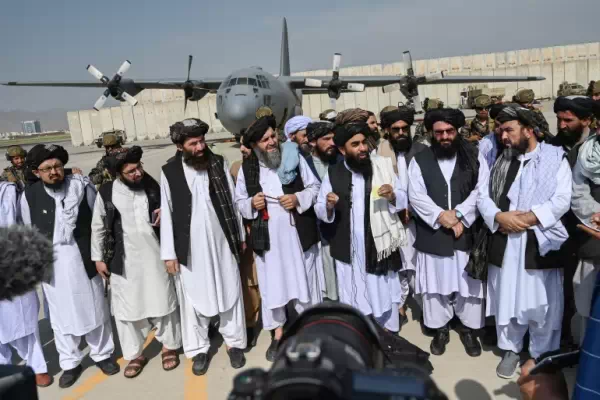
After the Taliban’s Triumph, Hopes from Kabul
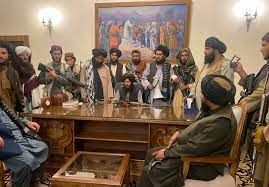
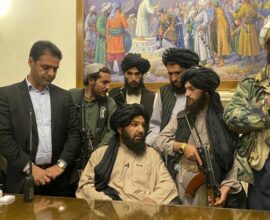
After Kabul fell to the Taliban on 15 August 19, 2021, a plethora of debates have raged in media, discussing hopes from Afghanistan .In fact many have started drawing inferences ranging from high hopes of transforming Afghanistan into an entirely Islamic welfare state based on sharia (the Islamic law) to conspiracy oriented shades of prospects, citing the swiftness which Kabul embraced the Taliban. Can Afghanistan become a state envisioned by the revolutionaries (the Taliban?
Before expecting any viable hope vis a vis Afghanistan, these factors need to be carefully deliberated. The success of revolutions cannot be measured instantly; instead, it takes time to reap the benefits of any revolution(s). Revolutions in Russia and France may serve as guidance. In many cases, any revolution may lead to another revolution(s) before yielding the result that a particular revolution set out to achieve. Moreover, the revolutionaries are not always good rulers. To fight a long battle and make unpresented sacrifices are commendable traits, undoubtedly, but to govern a state calls for an entirely different mettle and individualities.
Without a doubt, the Taliban still have to surmount so many challenges to actualize the dream of Emarat Islami Afghanistan. On top is the selection of shura (the parliament ) and the emir, the head of the state. It is believed that the Taliban would show profound political acumen to select the head who could rise to the occasion and meet a sea of challenges Afghanistan confronts today, at internal, regional and international arena.
The possibility of Mullah Bardar’s ascent to power, would have direct consequences for Pakistan. The ignominious haste and humiliation with which general Musharraf handed over Mullah Zaeef and hundreds of Taliban to the US would certainly be fresh in their minds. It is also significant to the highlight that the Taliban are fiercely nationalist in their outlook and approach; this disposition would certainly have reflections, while coining any foreign policy and operations.
After the selection of governors, the Taliban would have to deal with the arduous task of establishing a military, restructuring police, judiciary, formulating a body to stabilize economy which all require very mature and thoughtful planning. Such rightful selections would determine and shape fate and future of Afghanistan. For now, the Taliban seem to be in no haste visa vis foreign policy; they are waiting, and rightly so, the decisions of the foreign states. In this regard the Chinese and Russian response hold immense significance, not only for Afghanistan but for Pakistan and other countries with far-reaching strategic and economic prospects, stretching to gulf and beyond middle east.
At the internal front, the entire Afghanistan is not under control of the Taliban. The warlords of the northern areas have not accepted the defeat with an open heart. It seems as though the retreat was staged with a method ,and they would keep on posing a formidable challenge to Kabul.
Panjshir valley, north of Kabul , was a battleground for decades, first against the Soviets in the 1980s, then against the Taliban in the 1990s. It is still dotted with rusting tanks ,reminiscing the fights of those decades. The vice-president, Amrullah Saleh, born and trained to fight there, claimed it will reprise that role, after he declared himself “caretaker” head of state under the constitution, which the Taliban practically have swept aside.
In all likelihood ,they may receive help from their allies, who are against the Taliban. The availability of weapons is not an issue for these forces and the US also equipped them during last two decades. For the time being, the Mossad and RAW have become irrelevant with affairs in Afghanistan, other powerful agencies of the world including the CIA ,M5 must be active ,protecting their future stakes and interests in the region, especially China and Russia. It is interesting to point that even during Russian invasion in 80s, the KGB was in direct contact with the local tribal to protect their interests. In any tribal society such ties are not uncommon.
Though the Taliban have announced a general amnesty for all and vowed not to take any revenge, it is far from being realistic. They also have allowed to all supporters and sympathizers to the past regimes to leave Afghanistan. This a very pragmatic approach indeed. The Taliban don’t want to expand confrontation and chaos. However, once the promised sharia is enforced in Afghanistan, all those who killed or tortured the Taliban or their families, once the sharia courts are operational, revenge against all would inevitably be taken. And failure to do so, would lead to another spat of killings across Afghanistan.
Certainly, the Taliban would take time to stabilize and govern a war torn country. But media pundits in Pakistan already have started debating the future of women and their rights in Afghanistan. These media experts chose indifference and mysterious silence when the US and their allies bombed thousands of women and children to death. Now ,they are forgetting fact that the Taliban would ensure the rights promised by Islam and the Taliban have plenty of religious scholars who know very well the rights of women. Having asked the Afghan women to return to jobs and not making burqa mandatory for the women, the Taliban have demonstrated maturity. They wouldn’t accept any advice, advocated through Western lenses.
Let’s wait the policy of the Taliban to unfold before we draw any meaningful conclusion .Otherwise, these debates would remain mere elusive speculations and fancied conclusions, only to feed hatred against Pakistan in hearts our well-wishers.
The writer is an academic based in Islamabad.sliklight55@gmail.com